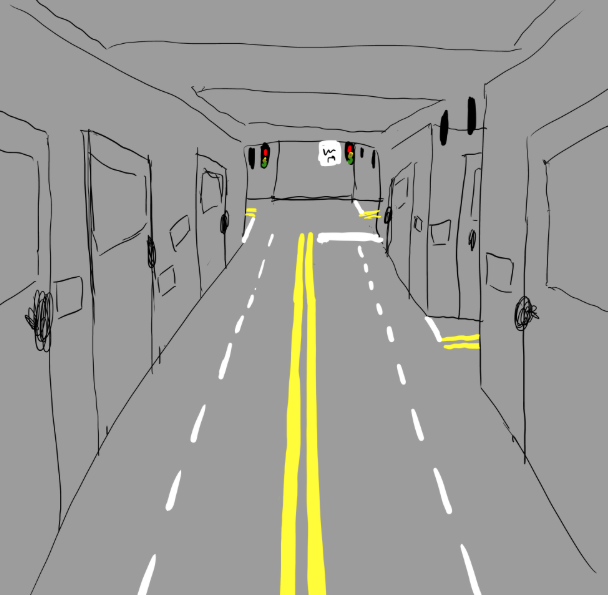
Today, we all know the school hallways as an orderly environment with clear rules. You go when the light turns green, and you stop when it’s red. Failure to follow these rules can lead to highly dangerous situations, which is why we all must pass the Indoor Commute Test in grade school. And, of course, the notorious Hallway Patrols execute these rules and make sure no one moves too recklessly.
But did you know these corridors were once uncontrolled mayhem? Students and staff hustled down these halls knocking into people left and right, front and back, diagonally too. Going up or down the stairs during rush hour gave a short person similar chances as Russian Roulette.
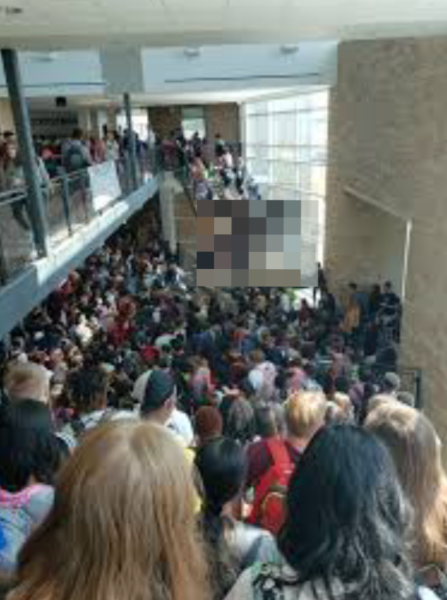
An expert in the history of traffic, Janet Wartman says: “It used to be so common for people to crash into each other and spill their stuff that the occurrence was used as a plot trope for two characters’ first meeting: they would be in the crowded hallway, picking up their stuff and thereby starting a conversation.”
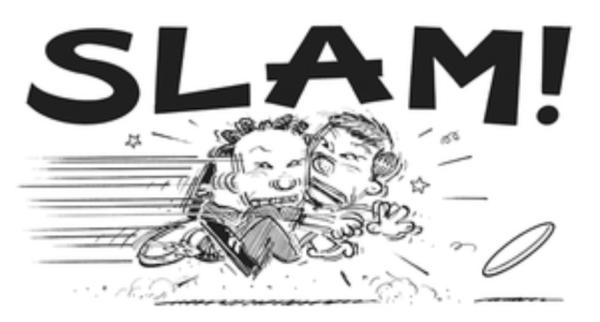
The journal of Benedict Gruff, which dates back to 2028, reveals that this chaos did not, in any way, speed up transport. In fact, the overcrowded hallways were responsible for his tardiness to three classes per day! He complained about trying to squeeze past people, only to be blocked by the opposing stream of students going in the opposite direction. Yes, appallingly, hallways once lacked even the simple separation between the two directions!
How, then, did we end up with today’s advanced transportation system?
Well, the first contribution can be attributed to Polly Plumposa, who first introduced the sheer idea of a barrier to hallways. In 2032, borrowing the design from the roads in her era, she painted solid lines in the middle of a few hallways in her local high school, and told the teachers in those hallways to ensure that students must walk in the lane to their right.
However, this soon proved to be a problem, since at different times of day, there could be a huge torrent of people going in one direction and scarcely a dozen going in the other, the most clear times being dismissal, the start of the day, as well as lunch. So by 2035, using the most advanced technology at the time, she’d coded the lines to move according to a set schedule.
After this groundbreaking invention, other hallway rules followed quickly, with notable figures such as Nicholas Brevvy installing hallway signs and traffic lights, Flora Wrenchiness creating the standardized Inschool Commute Test and its curriculum, and Paul Trufflehead starting the Department of Indoor Transportation.
The atrocious and mindblowing history of hallways reminds us to always remain grateful for inventions that seem commonplace but work tirelessly to keep us safe every day. Next time you step into a building, take a moment to appreciate these commodities that were carefully engineered by brilliant people to maintain order amongst otherwise devastating mayhem.