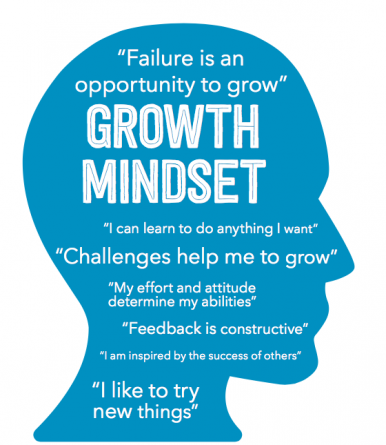
A study conducted in 2019 by a large interdisciplinary team of researchers, including team leaders David S. Yeager (University of Texas at Austin) and Carol S. Dweck (Stanford University), concluded that growth mindset interventions increased the average GPA among the student body. A sample of 6,320 9th grade students across 65 schools was observed as they completed online tasks that emphasized a growth mindset and healthy academic behaviors. Lower-performing students saw improved core subject GPAs (around 0.10 points) and fewer D/F averages. Likewise, a larger percentage of higher achieving students chose to take more advanced courses after engaging in these online tasks.
This study would later be known as The National Study of Learning Mindsets and holds up as one of the largest and most influential field studies in the history of education. However, the findings of this study are more than just numbers; its evidence suggests a larger pattern in American education that is affecting students on a larger scale.
About 87% of students attending public schools in America finish high school in their designated graduation year. Of that 87%, 47% of students graduate as “A students.” Given this information, what makes them different? What separates the 47% of graduates from the high school dropouts or failing students in the very same district? The National Study of Learning Mindsets sheds light on some of the core principles of an A student, one of which is that those who embody a growth mindset show higher academic performance.l. The study narrowed this frame of mind to four key points as follows:
Your Brain is a Muscle
While there are certain standardized measures of intelligence, your general cognitive ability cannot be fully measured by a test. Intelligence isn’t fixed; it develops through continued practice. Just like a muscle grows stronger when it is challenged, the brain changes when we push it beyond comfort (hence why we go to school to learn). Struggle doesn’t come from a lack of intelligence— it is often evidence that you are learning.
Embracing Challenges
Challenges feel uncomfortable because they expose what we do not yet know. But avoiding difficulty limits growth, while engaging with it builds confidence and adaptability. The moments that stretch us the most are often the ones that shape how we approach future obstacles. Difficult tests and assignments are prime opportunities to learn. Let your results be a measure of commitment rather than current ability.
Persistence and Strategy
Working harder isn’t always the same as working smarter. Persistence matters, but progress depends on adjusting strategies when something isn’t working. Growth comes from your ability to reflect, revise, and persist rather than repeating the same approach that is leading to unfavorable results.
Valuing the Process
Focusing only on outcomes can make learning feel transactional. Valuing the process of learning is equally as important as the results you’ll get. Practice, mistakes, and revisions shift attention from perfection to progress. When effort and curiosity matter as much as results, growth becomes sustainable rather than exhausting.
Students who acknowledge these elements are more likely to succeed than students who don’t because they are learning to value their mind as an institution and will adapt towards their highest achievements. Understanding the way you learn is arguably more important than what you are learning, as it quantifies your self-awareness. Sometimes, it’s good to step out of your comfort zone and explore different kinds of learning that could improve your ability to succeed.
When posed a difficult question or situation, it can be hard to stay on top of your game. Thus, a strong, foundational mindset is important as a baseline to keep you at your highest level of achievement and performance. Think about what principles you value, and how they have carried you through hard situations in the past. How do those principles align with a learning mindset? What habits can you implement into your routine to accomplish your goals? Your mindset and mentality will always feed directly into your behavior; there’s no time better than now to reflect on your core values and choose to embody a growth mindset.